
BME Professor Explores Why Some Blood Clots Break Apart to Become Life-Threatening

Valerie Tutwiler, an associate professor in the School of Engineering Department of Biomedical Engineering, focuses her lab’s cutting-edge research on characterizing the structural, mechanical, and enzymatic stability of blood clots. Her work is especially relevant today given the national coverage of Philadelphia Eagles quarterback Jalen Hurts’ diagnoses of deep vein thrombosis (DVT) and pulmonary emboli (PE) in both lungs –blood clotting conditions that can lead to potentially fatal consequences. Here, she shares some insights about blood clotting conditions gleaned from her research currently funded by the National Institutes of Health (NIH) and National Science Foundation (NSF) and others that investigates clinical problems ranging from thrombosis to hemorrhage affecting millions of people and which she describes as being are among the leading causes of preventable deaths.
Can you share more about your research?
The blood clotting process plays an essential role in both our daily lives and also in driving pathological conditions. When you get a cut, you want your blood to clot to prevent excessive bleeding. However, if a blood clot, or thrombus, forms when or where it isn’t needed, it can result in life-threatening conditions such as heart attack, ischemic stroke, DVT and PE. Our work is geared at understanding how changes in the dynamic clotting process manifest in clinical outcomes and/or the stability of blood clots. We’re particularly interested in delineating the mechanics of why some blood clots break apart, and others do not.
Why do some blood clots break apart while others don’t?
This remains an understudied area. This is where we, as biomedical engineers, are uniquely positioned to address this question, especially since blood clots must withstand a multitude of dynamic forces which make it critical to consider the mechanical nature of why and how blood clots break apart.
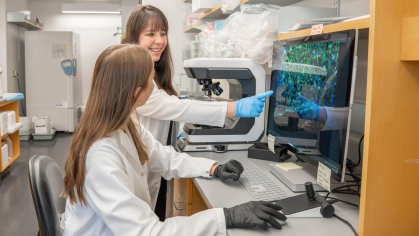
We’re collaborating on cutting-edge research with researchers at UPenn and UMass, Lowell, that let us measure how changes in clot architecture – such as those that would occur in people at risk for something like DVT – govern the resistance to embolization. Our experimental platform allows us to control and visualize the breakup of blood clots.
How does this research relate to Jalen Hurts’ condition?
It’s related in two key ways. First, we study how changes in the blood are mechanistically linked to an elevated risk of blood clot formation and/or altered mechanics. Second, we work closely with a clinical team at Robert Wood Johnson to assess how traumatic injuries – including spinal cord injury and traumatic brain injury – alter bleeding risk, thrombosis risk, and patient outcomes.
Does being a football player have anything to do with Jalen Hurts’ condition?
DVT is often caused by blood clotting disorders, injury or inflammation that triggers vessel wall damage, or slowed blood flow from bed rest or long travel. While playing football isn’t an inherent risk factor for a DVT, injuries, surgeries, leg immobilization, and dehydration do all increase the risk of thrombotic conditions such as DVT.
Is he unusually young to be experiencing this?
While thrombotic complications are often associated as an age-related condition, there are many things that increase your risk irrespective of age.
Do you have any advice for managing his condition?
I can’t comment on his specific case, as every patient’s situation biology, risk factors, and clinical pictures are unique. Only his care providers may comment on his treatment. Our research, however, does aim to improve early diagnoses, treatment, and individualized risk stratification for thrombus formation, which may help aid in the treatment of the millions of people who face these issues annually.
Would this become a lifelong condition needing management for Hurts?
Management will depend on the root cause of the DVT, and his care providers are the only ones who can comment on these specifics, but we wish him a speedy recovery.


